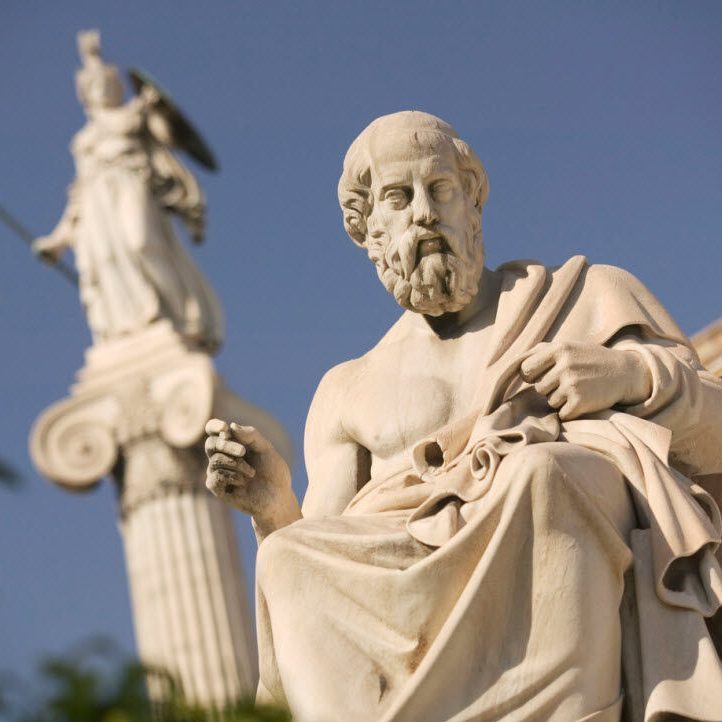
Apology (Plato)
Socrates, on trial in Athens for corrupting the youth and impiety, delivers a defense that is not a plea for mercy but a philosophical manifesto for his life’s mission. He explains that his reputation for wisdom stems from his humble admission of ignorance, unlike those who falsely claim knowledge, a realization he gained while testing the Delphic oracle’s pronouncement. He frames his disruptive questioning as a divine duty, comparing himself to a gadfly that stirs the noble but sluggish horse of the Athenian state toward virtue and self-examination. Through cross-examination, he logically dismantles the charges, showing their contradiction, and refuses to cease philosophizing even to save his life. When found guilty, he provocatively suggests the city reward him with free meals rather than punish him, and after the death sentence is passed, he calmly argues that death is not an evil but either a dreamless sleep or a journey to a place where he can converse with great heroes, concluding that “the unexamined life is not worth living” for a human being.
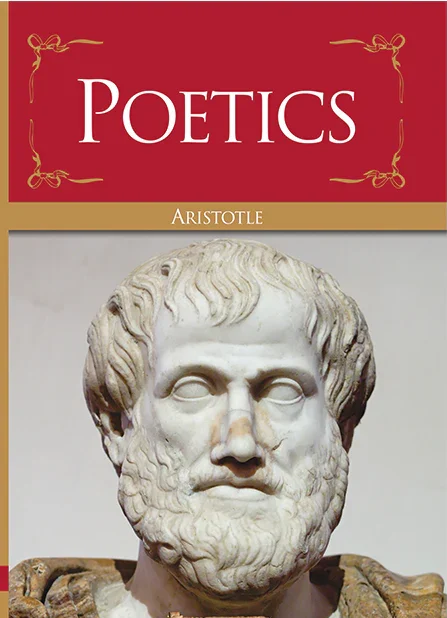
Poetics (Aristotle)
Aristotle’s **”Politics”** is his foundational treatise on political philosophy, where he systematically analyzes the nature, purpose, and forms of the state (*polis*). He famously defines **man as a “political animal”** (*zoon politikon*), arguing that human fulfillment and moral virtue can only be achieved within a political community. The work classifies six forms of government based on who rules and for whose benefit: the three “correct” constitutions—**Kingship** (rule by one for the common good), **Aristocracy** (rule by the few best), and **Polity** (rule by the many for the common good)—and their three “deviant” or corrupt counterparts—**Tyranny**, **Oligarchy**, and **Democracy** (which he saw as mob rule for the poor’s benefit). Aristotle pragmatically advocates for **Polity**, a mixed constitution blending elements of oligarchy and democracy, as the most stable and practicable for most cities, heavily relying on a strong **middle class** to prevent polarization. Ultimately, he posits that the state’s goal is not merely living, but **”living well”** through the pursuit of virtue and the common good, with law reigning supreme as “reason without desire.”
al-Kindi-On the Essence of the Intellect
In his treatise “On the Essence of the Intellect,” the philosopher Al-Kindi presents a foundational philosophical psychology, defining the intellect as a simple, immaterial, and luminous substance distinct from physical bodies. He systematically classifies the intellect into four distinct hierarchical stages: the “material intellect” (*al-ʿaql al-hayūlānī*), which is the pure potentiality for thought; the “habitual intellect” (*al-ʿaql bi-al-malaka*), which has acquired primary intellectual principles; the “actual intellect” (*al-ʿaql bi-al-fiʿl*), which actively engages in thought and possesses knowledge; and finally, the “acquired intellect” (*al-ʿaql al-mustafād*), the highest stage representing the human mind’s connection to the divine “Active Intellect” and the source of prophetic revelation and pure truth. This neo-Platonic and Aristotelian framework established a crucial paradigm for the theory of intellect in Islamic philosophy, directly influencing later giants like Al-Farabi and Avicenna and shaping debates on epistemology and the soul’s relationship to the divine.